MALTA (EU) RESIDENCY & CITIZENSHIP

Malta Residency & Citizenship: Security. Opportunity. A Better Life.
Building a Future in Malta: Long-Term Residency and Citizenship Options.
Welcome to the European Union!
Unlock a world of privilege with Maltese citizenship through the Malta (EU) Citizenship by Merit framework or enjoy the benefits of European living with the Malta Permanent Residence Programme.
As a European Union passport holder, you and your family gain unparalleled access to 31 EU countries, visa-free travel to over 180 destinations, and the opportunity to live, work, or study anywhere in Europe.
Malta citizens can benefit from a wide range of world-class social services, including free education and healthcare. Because Malta is a member of the European Union (EU), a passport from Malta conveys rights and privileges similar to the passports of Germany, France, or any other EU country.
Innovators, cultural leaders, philanthropists, and accomplished individuals worldwide view Malta citizenship as a powerful asset and a reliable safeguard—whether to ensure security in uncertain times or to gain a prestigious second passport that enables seamless international mobility. Because Malta allows dual citizenship, most applicants retain the citizenship of their home country in addition to receiving a second passport from Malta (EU).
Visa-Free Global Travel
The Malta (EU) passport provides visa-free or visa-on-arrival access to 180+ destinations, including the USA, Canada, and the UK.
Live Anywhere in Europe
The right to live, work, study, or retire in any EU member state, with free movement across the Schengen Area.
Security & Wealth Protection
A stable EU jurisdiction offering personal security, rule of law, and long-term protection for your family's assets.
World-Class Healthcare
Access to Malta's highly ranked healthcare system and private care across the European Union.
Premium Education
English-language schooling in Malta and access to universities throughout Europe for your children.
Private & Confidential
Your privacy is our top priority. Contact us today for a free quote.
LIVE, WORK, STUDY, OR RETIRE IN ANY OF THE EU COUNTRIES
Dual citizenship with Malta (the European Union) offers more than a second passport - it’s a statement of success and global mobility. Elevate your lifestyle with exclusive business opportunities, European banking, world-class healthcare, and premium education for your family.
Applicants are not required to continuously live in Malta before or after citizenship approval.
In under two years, you can join an elite circle of global citizens who understand that true power lies in having options. Malta (EU) citizenship is your key to preserving wealth, protecting assets, and maintaining personal freedom in an uncertain world.
VISA-FREE TRAVEL TO OVER 180 COUNTRIES, INCLUDING THE USA
Malta citizenship offers full European Union benefits, including Schengen borderless travel and a United States visa waiver. This means visa-free travel to more than 180 countries in the world, including the USA, Canada, Middle East, Africa, Asia, and most countries in North, Central and South America.
A BETTER QUALITY OF LIFE FOR THE FAMILY
Malta is a safe country that offers a low cost of living index. Clean air, property rights, and freedom of speech are enjoyed by all. Multiple cultures live side by side in peace and harmony. The country has long been a vacation spot for Europeans and high net worth individuals who flock to the island for its sunny and warm climate year-round.
A BETTER EDUCATION FOR THE APPLICANT’S CHILDREN
Because of the country's history as a former British colony the Maltese school system reflects the British structure. State schools are free to all students (including free transportation and free books), while private schools such as international schools charge tuition fees. Attending the renowned University of Malta is free for Malta citizens and their children.
Malta (EU) Citizenship / Residency Program Summaries
Residency and Citizenship for Qualified Applicants
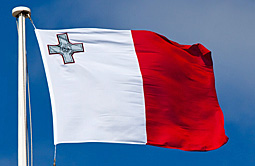
MALTA CITIZENSHIP BY MERIT (CBM)
The Malta Citizenship by Merit (CBM) regulation is the official framework for exceptional individuals to obtain Maltese (EU) citizenship. This framework prioritizes meaningful, long-term contributions to Malta’s economy, culture, and society.
Eligibility focuses on distinguished global contributors, including innovators, scientists, artists, entrepreneurs, and philanthropists who pass a rigorous due diligence process and demonstrate a genuine link to Malta.
Application Stages (Stages 0-4)
The CBM application process is structured in clear stages, from initial screening to passport issuance, typically taking 12-16 months.
-
Stage 0 — Citizenship Proposal Outline Preparation and Assessment
Government-mandated AML/KYC screening, then a structured consult to map your background and intended contribution (e.g., local charity support, new business, or other qualifying initiative). We prepare a proposal outline that matches your profile with Malta’s strategic interests.
Targeted result: Completed initial due-diligence, strength assessment of contribution, recommended actions.
Indicative timing: ~1 week. -
Stage 1 — Residency (Malta Residency Application)
Preparation and filing of the mandatory temporary residency application: forms, document collation, and coordination of your biometrics appointment with the Maltese authorities.
Targeted result: Malta residency cards (Schengen travel enablement) and CBM eligibility platform.
Indicative timing: 2–3 months. -
Stage 2 — Due Diligence (Malta Citizenship Eligibility Application)
The most technical step. We prepare and file the formal eligibility application while the authorities run extensive multi-jurisdiction due-diligence (identity, integrity, source of funds/wealth), and we manage RFIs and top-ups through to completion. Applicants may file the eligibility application after maintaining residence status for eight months, with no obligation to live in Malta continuously during this period.
Targeted result: Eligibility approval.
Indicative timing: ~4–6 months. -
Stage 3 — Merit Proposal
We develop the full merit proposal — achievements, Malta-focused impact, feasibility, governance, and a delivery plan aligned with Malta Vision 2050 — with evidence indexed for quick verification. The effort ranges from light for a donation-based proposal to substantial for a company-formation proposal requiring a business plan, financial model and forecasts. In practice, Stage 3 (Merit Proposal) is prepared in parallel with Stage 2 (Due Diligence) and submitted together as one case file.
Targeted result: A complete merit proposal submitted with the eligibility case.
Indicative timing: Prepared alongside Stage 2 (varies by complexity). -
Stage 4 — Naturalization
Following eligibility approval, we finalize and file the citizenship application, schedule the oath/pledge, and coordinate issuance of your Certificate of Naturalization and passport.
Targeted result: Confirmation of Maltese (EU) citizenship and passport issuance.
Indicative timing: ~1–2 months. -
Optional — Proposal Implementation & Compliance Reporting
Post-grant support to implement your merit contribution and manage any ongoing compliance or progress reporting the authority may require.
Targeted result: Successful implementation and any required compliance confirmations.
If you're unsure whether you qualify, contact us to discuss your profile or complete our Malta CBM qualification assessment form.
MALTA PERMANENT RESIDENCE PROGRAMME (MPRP)
The Malta Permanent Residence Programme (MPRP) for non-EU nationals offers the right to live in Malta year-round and 90-day visa-free travel to all European countries within the Schengen area.
This program grants a permanent residency certificate that is valid for life (renewed every 5 years). Family members, such as a spouse, children, parents, and grandparents may be included. This program does not lead to Malta citizenship / the Malta passport.
The MPRP program leads to Maltese residency within a few months. The applicant makes the required investments *after* receiving the residency approval in principle. Residing in Malta continuously is not a requirement.
MPRP PROGRAM COST:
Main applicant: EUR 60,000.
Spouse and Minor Children: No additional charge.
Adult Dependents (older children, parents, grandparents): EUR 7,500 each.
2. Malta Government Contribution (non-refundable):
Main applicant: EUR 37,000 (same whether property purchase or rental).
3. Malta Philanthropic Donation:
Main applicant only: EUR 2,000.
4. Malta Property Investment (minimum 5-year holding period):
Main applicant only: Property purchase at EUR 375,000 OR property rental at EUR 14,000 per year.
5. Legal Fees:
Depending on the number of family members to be included.
To calculate government fees, please use our MPRP Cost Calculator. Please contact us for a custom quotation.
MPRP QUALIFICATIONS:
- The main applicant must prove ownership of assets valued at (A) EUR 500,000 or more (with at least EUR 150,000 in liquid funds), OR (B) EUR 650,000 with at least EUR 75,000 in liquid assets.
- These liquid funds do not need to be transferred to Malta.
- These assets cannot be used for the application.
- The requirement to hold these assets stops after five years.
The MPRP program does not lead to Malta citizenship. Residents may apply for citizenship after 5 years, but applications usually take 10 to 15 years to be approved. If you are interested in qualifying for Malta citizenship, please review the Malta Citizenship by Merit page.
OTHER MALTA RESIDENCY PROGRAMS
In addition to permanent residency, Malta provides temporary residency programs for EU citizens and non-EU nationals. These programs do not confer permanent residency or lead to Malta citizenship.
Please review our Malta Residency page for additional details.
MALTA GLOBAL RESIDENCY PROGRAMME (GRP)
The GRP targets wealthy non-EU citizens by offering 1-year (tax) residency in Malta and 90-day visa-free travel to the Schengen area. The program offers a low flat tax rate of 15% on foreign-sourced income remitted to Malta (min. annual tax of EUR 15,000 - increasing to EUR 35,000 starting 2027). Residency status under the GRP must be renewed annually.
MALTA TAX RESIDENCE (TRP) & ORDINARY RESIDENCE (OR)
These programs are only available for EU nationals. The Ordinary Residence (OR) program is for EU citizens who want to live in Malta 183+ days per year. The Tax Residence Programme (TRP) is for EU citizens who do not spend more than 183 days in any other single jurisdiction and offers a special 15% tax rate on income brought into Malta (min. annual tax: EUR 15,000).
MALTA RETIREMENT PROGRAMME (MRP)
Targeted at retirees (EU and non-EU) who receive a pension in Malta. The pension must equal at least 75% of the applicant’s total income. Foreign-sourced income remitted to Malta is taxed at 15% (min. annual tax: EUR 7,500).
MALTA NOMAD RESIDENCE PERMIT (MNRP)
The "Digital Nomad Visa" is for non-EU nationals who can work remotely. Applicants must prove they earn at least EUR 3,500 per month from work or clients based outside of Malta. The visa is valid for one year and is renewable up to 4 years.
MALTA STARTUP RESIDENCE PROGRAMME (MSRP)
For non-EU startup founders, co-founders, and core employees who register their venture in Malta with a minimum EUR 25,000 investment. The startup must be less than 7 years old. The permit is valid for 3 years, renewable for another 5.
Citizenship / Residency Application Process
The Application Procedure Step by Step

From Consultation to Certificate
Step 1: Initial Consultation
Begin by
completing our contact form to request a personalized cost estimate for you and your family. This initial consultation is provided at no charge.
Step 2: Document Preparation
Once you choose to proceed, our immigration attorney and dedicated case specialists will guide you through completing all required forms and collecting supporting documentation. Your application file is then submitted to the Maltese authorities.
Step 3: Application Processing
The Maltese government reviews the submission and initiates its due diligence procedures. The result may be an Approval in Principle, a request for clarification, or a denial.
Step 4: Compliance Phase
Following Approval in Principle, the applicant must demonstrate compliance with program requirements, including real estate acquisition/lease, health insurance, and financial undertakings.
Step 5: Certificate Issuance
Residency applicants will receive a Permanent Residency Certificate. Citizenship candidates will complete an Oath of Allegiance before being granted a Certificate of Naturalization and their Maltese (EU) passport.
Malta's Standing in the European Union
One of the Safest Countries in the EU

SAFE, NEUTRAL, AND RESPECTED
Malta is a safe, neutral and respected member of the European
Union since 2004 and part of the Schengen Area since 2007.
The country enjoys a stable political climate and a bi-partisan
political scene that is largely convergent on issues of national
and economic importance.
Malta has weathered the financial
crisis well and shared the limelight with Germany as the only two
states maintaining economic growth in the Euro Zone. Malta's banks
have been ranked amongst the top 5 soundest banks in the world.
The Island offers a rich, contemporary cultural lifestyle, temperate
climate and fascinating history. Malta is also a state of the art
financial and business hub due to its competitive tax system and
offers significant advantages to foreign entrepreneurs, high net
worth individuals and investors seeking an attractive yet safe business
environment.
For the last two decades Malta has enjoyed solid
and constant growth in its financial services industry and is fast
becoming the jurisdiction of choice to international corporate groups
seeking an ideal hub from which to do business within the EU, Middle
East and North African markets.
Our Qualifications
A Team of Specialists at your Service
YOUR SUCCESS IS OUR MISSION
Our immigration attorneys are government-licensed Authorised Registered Mandatories, and our dedicated team - including specialists focused exclusively on Malta citizenship and residency - will support you every step of the way, from initial consultation to final approval.
Apart from our expertise in immigration law, we offer comprehensive assistance in real estate acquisition and leasing. Additionally, our associates specialize in company formation and provide tax advisory services to a diverse clientele.
Services offered:
- Advising you on your chances of success before filing your application;
- Providing you with pre-immigration legal and tax advice;
- Guiding you with the preparation of supporting documentation;
- Vetting and preparing all supporting documentation for submission;
- Corresponding and liaising with government authorities on your behalf;
- Obtaining application progress updates on your behalf.
Additional services (if needed):
- Assisting with the Malta real estate purchase and lease process, from start to finish;
- Providing legal and notarial representation on purchase, rental, and re-sale of Malta property;
- Advising on personal and corporate international tax planning;
- Dealing with all periodical tax matters, including annual returns and tax payments;
- Drawing up of wills, international probate;
- Assisting with the administration of estates, foundations, and trusts;
- Advising on the formation and management of trading and holding companies in Malta;
- Assisting with yacht registration & VAT planning.
Transparency, honesty, and integrity are at the core of our
values. Your satisfaction is our top priority. For your convenience,
our expert consultants are adept in a variety of modern communication
channels, including email, phone, chat, Zoom, and in-office meetings.
We look forward to working with you!
Frequently Asked Questions (FAQ)
Malta (EU) citizenship for international
applicants and their families.
Live and work
in the European Union.
The following are questions frequently asked about immigrating to Malta by way of making an investment. If you don't find your answers here, please contact us at your convenience.
Q: What is the Malta Citizenship by Merit?
A: The Malta Citizenship by Merit (CBM) is the country’s
newly established framework for granting EU citizenship to distinguished
individuals who demonstrate exceptional contributions across sectors
such as science, entrepreneurship, culture, and global impact. Unlike
previous models focused primarily on investment thresholds, this
option
recognizes talent, innovation, and strategic value to the nation.
The Merit framework replaces Malta’s former “Citizenship by Exceptional
Services” initiative, which officially closed in April 2025 following
an extensive government review. That program had gained international
attention for its rigorous vetting and transparent process but was sunset
to make way for a more merit-oriented, reputation-enhancing framework.
The Citizenship by Merit
regulation
introduces elevated standards for applicants and emphasizes integrity,
reputation, and long-term engagement with Malta. It reflects Malta’s
vision of citizenship not merely as a transactional benefit, but as
a privilege earned through demonstrable excellence.
Q: What are the benefits of Malta citizenship?
A: Malta citizenship offers many benefits to applicants;
international business executives, investors, public figures, VIPs,
and affluent citizens of other countries consider an alternative citizenship
and passport a powerful tool for international tax planning and a safety
net should the living conditions at home become undesirable.
Because Malta allows dual citizenship, most applicants retain the
citizenship of their home country in addition to receiving a second
passport from Malta (EU). There is no requirement for Malta citizens
to live in Malta once citizenship has been received. The Malta passport
is rated as one of the most valuable passports in the world.
The benefits of Malta citizenship include permanent rights, privileges,
and protections. Because Malta is a member of the European Union, Malta
citizenship also allows applicants to live, work, and retire in all
other EU member countries. Malta citizenship isn’t just a travel document
- it’s a long-term investment in global mobility, legacy planning, and
lifestyle optimization.
The time to process an application for
Malta citizenship and start to receive citizenship benefits takes between
12 to 16 months.
Benefits of Malta citizenship include:
- The right to live, work, study, and retire in any country within the EU
- Visa-free travel to over 180 countries
- Access to high-quality healthcare and education
- A transparent and robust financial infrastructure
- No Maltese language requirement
- English as a national language
- Dual citizenship is allowed
- Access to free education
- Access to free healthcare
- A better quality of life in a sunny and warm climate
- Personal security and the freedom associated with dual citizenship
- The opportunity to live /work/ study / retire in any EU or Schengen country
- The right to operate a business and work in the EU
- The opportunity to benefit from Maltese tax residency
- No minimum stay requirement
Summary
What are the benefits of Malta citizenship? There are many benefits
to holding Maltese citizenship, including living/working/retiring in
a safe European country with a warm climate, access to first-class healthcare
and education, and the right to travel freely across Europe and over
180 destinations. The Malta (EU) passport is considered one of the most
valuable passports in the world. English is spoken widely, and applicants
are allowed to keep their original citizenship / passports because Malta
allows dual citizenship status.
Main Points: Malta citizenship benefits
- Malta passport one of the highest ranked
- Live, work, retire anywhere in the EU
- Visa-free travel in EU and over 180 countries
- High-quality healthcare and education
- English language spoken widely
- Dual citizenship allowed
- Sunny and warm climate
- Tax advantages
- Stable financial and political system
Q: What is the difference between residency and citizenship
in Malta?
A: Malta citizenship offers
permanent rights, protections, and full access to the benefits of Maltese
nationality, including the ability to live, work, and study across all
European Union member states. Citizens may apply for a Maltese passport,
ranked among the most powerful in the world, and are not required to
reside in Malta to maintain their status.
In contrast, residency
- whether temporary or permanent - permits individuals to live in Malta
but does not extend the privileges of EU citizenship. Temporary residency
typically grants stay for a defined period, while permanent residency
allows indefinite residence within Malta. However, residents are encouraged
to spend meaningful time in the country, even though Malta has not set
a minimum-stay requirement.
The application timeline differs
as well: Malta residency can be granted within two to three weeks of
filing, while full citizenship through merit typically takes 12 to 16
months. Residency often serves as the first step toward citizenship,
but naturalization via traditional means can take a decade or longer.
Malta offers multiple pathways depending on applicant profile, including
temporary residency, permanent residency, and citizenship through the
Merit-Based Citizenship framework. Dual citizenship is permitted, allowing
individuals to retain their original nationality while gaining EU citizenship
status.
Summary:
Residency grants the right to live in Malta. Citizenship confers full national rights, EU mobility, and the option to hold a Maltese passport. Only citizens can access Malta’s social services, vote, or work without restrictions. While residency can lead to citizenship by naturalization over many years, Malta’s merit-based option offers a much faster route.
Main Points: Differences between Malta Citizenship and Residency
- Residency is limited to Malta
- Residency provides no passport
- Citizenship offers the passport
- Malta citizenship means EU citizenship
- Citizens can live/work/retire anywhere in the EU
- Malta allows dual citizenship
Q: What is the cost of the Malta Citizenship by Merit?
A: Malta no longer grants citizenship solely based
on financial contributions. Instead, applicants must now meet merit-based
criteria, such as cultural, scientific, economic, or philanthropic contributions
to Malta. While financial investment may still be part of one’s profile,
it's no longer a guaranteed route to citizenship.
Bottom line: There is no fixed cost anymore. Eligibility depends on merit, meaningful engagement, and alignment with Malta’s national interest.
We can help assess your eligibility for Malta’s merit-based citizenship framework. If you're unsure whether you qualify, contact us to discuss your profile and next steps.
Q: What is the cost of the Malta permanent residence program
(MPRP)?
A: The cost of Malta MPRP permanent residency is around
€99,000 plus fees and property rental (or purchase).
There are
three main types of expenses: government-mandated investments, government
application fees, and legal fees.
Investment breakdown:
Main applicant: EUR 37,000 (same whether property purchase or rental).
2. Malta Property Investment (minimum 5 year holding period):
Main applicant only: Property purchase at EUR 375,000 or property rental at EUR 14,000 per year.
3. Malta Philanthropic Donation:
Main applicant only: EUR 2,000.
4. Malta Government Administration Fee:
Main applicant: EUR 60,000.
Spouse and Minor Children: No additional charge.
Adult Dependents (older children, parents, grandparents): EUR 7,500 each.
5. Legal Fees:
Depending on the number of family members to be included. To calculate government fees for applicants who wish to include dependents, please use our MPRP Cost Calculator. Total legal fees depend on the number of family members to be included. Please contact us for a custom quotation.
Q: Does Malta allow dual citizenship with the United States?
A: Yes—Malta permits dual citizenship with the
United States as well as many other countries. This means eligible applicants
can retain their original passport and also acquire a Maltese passport.
However, while Malta and the U.S. recognize dual nationality, it’s
important to verify your home country’s stance. Some countries, such
as China, prohibit dual citizenship and may require you to renounce
your original nationality before acquiring another.
Malta has
long allowed dual citizenship, with legal pathways including birth,
registration, naturalization, and the Citizenship by Merit
framework. Similarly, the United States does not require its citizens
to relinquish U.S. nationality when obtaining a second citizenship.
If your country of origin permits it, you - and eligible family
members - can enjoy dual citizenship in Malta. The Maltese government
imposes no restrictions on holding both Maltese and foreign nationalities.
As a Maltese citizen, you gain access to full EU privileges, including
the freedom to live, work, and study across Europe.
Key benefits
of Malta citizenship include visa-free travel to over 180 countries
(including the U.S., Canada, and the UK), access to world-class healthcare
and education, and the ability to preserve personal and financial freedom
across jurisdictions.
Summary:
Can U.S. citizens apply for dual citizenship? Yes, United States citizens can keep their US passport because Malta allows all applicants to keep the citizenship of their origin. Applicants from the US are free to choose between keeping their US citizenship or renouncing it after Malta citizenship has been granted. Applicants from other countries should check with their governments to confirm their country allows dual citizenship. While most countries have no restrictions on obtaining a second nationality, some countries do not allow their citizens to hold a second passport.Main Points: Malta Dual Citizenship
- Malta allows dual citizenship
- US citizens can keep the US passport
- Dual citizenship extends to families
- Many countries allow dual nationality
Q: What is the difference between the Global Residence
Program (GRP), and the Malta Permanent Residence Programme
(MPRP)?
A: The Maltese Global Residence Program (GRP)
offers 1-year residency in Malta, 90-day visa-free travel to
all European countries within the Schengen area, and the option to apply
for a Malta work permit.
However, residency status under the GRP program needs to be renewed
annually to avoid expiration. The annual minimum tax is €15,000 - increasing to EUR 35,000 starting 2027. Further, the applicant is
required to rent a residence at an annual lease of no less than €8,750
(a property purchase is also acceptable). Thus, the total minimum expense
to renew the GRP permit each year is approximately €24,000 plus fees.
GRP visa applicants can also benefit from Malta's low flat tax rate
of 15% chargeable on all income remitted to Malta from foreign sources,
subject to a minimum annual tax of EUR 15,000 - increasing to EUR 35,000 starting 2027. To take advantage of
the tax benefit GRP applicants must refrain from staying in any other
jurisdiction for more than 182 days and becoming a tax resident in that
other country.
Processing can be as fast as 3-4 months. The GRP does not
lead to Malta citizenship, and it does not result in
receiving a Malta passport.
The Malta Permanent Residence Programme (MPRP) leads
to residency (meaning the permission to live in Malta as long as desired),
visa-free travel to all European countries within the Schengen area
for 90 out of 180 days, but unlike the GRP it has no
recurring minimum tax. In other words, the MPRP does not
need to be renewed each year.
The applicant can choose between purchasing a property, or renting a
property. If purchasing, the minimum property value must be EUR 375,000.
If renting a property, the minimum rental amount must be EUR 14,000
per year.
The administrative fee for the main applicant is €60,000. There is no administrative fee to include a spouse and minor children. The fee for adult dependents (older children, parents, grandparents) is €7,500 per person.
The main applicant must also make a non-refundable government contribution in the amount of EUR 37,000 regardless of whether the property is purchased or rented. Lastly, the applicant must make a philanthropic donation of EUR 2,000 to a Maltese-registered charity of the applicant's choice.
To qualify, the main applicant needs to prove ownership of assets valued at (A) EUR 500,000 or more, which may include bank deposits, stocks/bonds/mutual funds, real estate, and similar, with at least EUR 150,000 in liquid funds, or (B) EUR 650,000 with at least EUR 75,000 in liquid assets.The MPRP program leads to Maltese residency within a few weeks, but just like the GRP program it does not lead to the Maltese (EU) citizenship and the Malta passport. Residents may file a citizenship application after 5 years in residency status, but any citizenship application may be approved or rejected entirely at the discretion of the minister and the department in charge. There is no guarantee that an approval will be granted, and any approval typically takes 10-15 years!
The following table compares both residency programs:
| Global Residency Program (GRP) | Malta Permanent Residence Programme (MPRP) | |
|---|---|---|
| Minimum Tax | EUR 15,000 (EUR 35,000 starting 2027) | Zero |
| Tax Rate | 15% | 0% – 35% |
| Property Purchase | Central/North EUR 275,000 South/Gozo EUR 220,000 |
EUR 375,000 |
| Property Rental | Central/North EUR 9,600 South/Gozo EUR 8,750 |
EUR 14,000 |
| Minimum Stay in MT | Zero | Zero |
| Official Application Fee | EUR 6,000 | EUR 60,000 |
| Contribution | Zero | EUR 37,000 |
| Donation to Charity | Zero | EUR 2,000 |
| Dependents | Spouse, Children, Brothers,
Sisters, Parents (if financially dependent) |
Spouse & Minor Children: Zero Adult Dependents (Older Children, Parents & Grandparents): EUR 7,500 each |
These cost estimates are exclusive of attorney fees and will vary
based upon the number of family members to be included.
Please contact us for a checklist of all required application documents
and to receive a detailed quotation. If you are planning to apply for
more than one family ask us about a group discount.
For an additional in-depth discussion and frequently asked questions
about the Malta permanent residence (MPRP) program please see our in-depth
MPRP FAQ page.
Q: What is the difference between the Ordinary Residence
(OR) program and The Residence Program (TRP)?
A: Both programs are only available for EU nationals,
meaning applicants who are already a citizen of another EU member country.
Both programs allow EU citizens to live in Malta indefinitely. The Residence
Program (TRP) offers a special flat tax of 15% on income brought into
Malta (EUR 15,000 annual tax minimum) which makes this program especially
attractive to high income individuals. These programs do not
lead to Malta citizenship / the Malta passport.
Q: Are your attorneys licensed by the Malta government?
A: Yes. Our immigration attorneys are Authorized
Registered Mandatories - licensed
Agents by the Community Malta Agency (Aġenzija Komunita' Malta).
Q: Do you get citizenship if you buy real estate in Malta?
A: Applicants cannot buy Maltese citizenship, nor will
they receive citizenship for only investing in Malta real estate. Instead,
applicants under the Malta Citizenship by Merit regulations must demonstrate
they meet all eligibility requirements.
Summary
Does buying real estate in Malta give you citizenship? Purchasing or
renting a personal residence in Malta is only one of
several expenses when applying for the Malta citizenship. Malta
offers several options for residency or citizenship, including temporary
residency, permanent residence (Golden Visa), or Malta citizenship,
and all programs require the applicant to purchase or lease a personal
property in Malta. In addition to renting or buying a personal
residence, applicants must meet all other program requirements.
Main Points: Malta citizenship for real estate investment
- Real estate investment is required
- Property rental (or purchase) qualifies
- Real estate is only one of several requirements
Q: How easy is it to get Malta citizenship?
A: While traditional naturalization in Malta can
take over a decade, the Citizenship by Merit option offers a streamlined
path for qualified applicants - typically completed within 12 to 16
months. That said, “easy” doesn’t mean effortless. The process involves
careful coordination and compliance at each step.
Applicants
may work with a government-licensed legal agent to prepare and submit
a complete file. This includes detailed forms and supporting documentation
for all family members. The government then conducts rigorous due diligence
and background checks to verify eligibility and integrity.
Approvals are solely at the discretion of the government. If approved,
new citizens may apply for the Maltese (EU) passport, enabling visa-free
travel to over 180 countries and the right to live in any EU member
state.
In short: Malta citizenship isn’t “automatic,” but with
the right guidance and preparation, the merit-based option is one of
the fastest and most straightforward EU frameworks available.
Summary
Is it easy to get the Malta citizenship? Applying for a residency or
citizenship in Malta is a regulated procedure that requires
following well-defined application steps, submitting detailed application
forms, and passing all due diligence checks. Applicants must also pay
certain government fees, prove merit, as well as purchase or lease residential
real estate property. Application processing for the citizenship
can take 12-16 months until citizenship is granted.
Main Points: Is Malta Citizenship Easy
- No EU citizenship is "easy"
- Strict due diligence is applied
- A clean criminal record is required
- Applicants must comply with all rules
- The application process takes 12-16 months
Q: How will new citizens be taxed?
A: Malta taxation is only based on domicile (your permanent
home), and not on residency or citizenship status.
Under Maltese Law, at birth you automatically acquire your domicile
status (Domicile of Origin) from your father. If your father later changes
his domicile to a new location (Domicile of Choice), yours automatically
changes to this new location as well. On attaining the age of 18, you
are allowed to acquire a new domicile of choice, but there is no such
requirement.
This means if you don’t make Malta your domicile, then only income
and capital gains generated from activities inside Malta are fully taxable.
Income, such as from employment, arising outside of Malta and not sent
to Malta is not taxable. In addition, capital gains or savings generated
outside of Malta even if brought into Malta are not taxable for non-domiciled
residents.
In other words, tax is due only on (a) income generated inside of Malta,
(b) capital gains arising inside of Malta, and (c) income generated
outside of Malta and remitted to Malta.
Other Tax Considerations:
- No inheritance or death taxes
- No estate duty
- No net worth or wealth taxes
- No municipal taxes, rates or real estate taxes
Q: Can I include my family with my Malta citizenship application?
A: Yes. The main applicant for Maltese citizenship
may include a spouse or long-term partner (gender neutral), minor children
under 18 years of age, and financially dependent adult children under the
age of 29.
Q: Will my citizenship expire?
A: No. When you acquire Malta citizenship you and your
family enjoy full citizenship for life, which can be passed on to future
generations by descent.
Q: How long does it take to get Malta citizenship?
A: The Malta Citizenship by Merit typically
takes 12 to 16 months, with the exact timeline depending on how quickly
the applicant provides required documentation.
Applicants first
obtain Malta residency, usually within a few weeks, by submitting initial
documents. This grants an E-Residence card and facilitates Schengen
travel across Europe.
The second step is the citizenship application
itself, including a comprehensive background check and vetting process.
Once approved, the applicant receives Maltese citizenship and their
EU passport.
Benefits include:
- Visa-free travel to over 180 destinations (including the US, Canada, and UK)
- The right to live, work, and study anywhere in the European Union
- Access to Malta's high-quality healthcare and education
- No restrictions on dual citizenship, so you can keep your existing nationality
Summary
How long is the processing time to get the Malta citizenship? Malta
residency is granted in a few weeks after application processing, which
is the first step of the citizenship application procedure. Malta citizenship
processing, which is the second step in the application procedure, takes
12 - 16 months. Processing times also depend on how fast the applicant
can provide the required documentation, such as a clean police record.
Q: Can you help me find suitable real estate in Malta?
A: Yes. Please review available properties with pictures
and prices on our Malta real estate
page.
In addition, we offer a full range of professional
real estate services to buyers; please request our "Malta Real Estate
Services" brochure for details.
Further, we are associated with
licensed real estate agencies and developers in Malta and can help you
find a property that fulfills all requirements. We will ensure that
your preferred property meets the minimum standards of your residency
or citizenship application as many properties currently do not meet
these requirements. Having rented or bought a property that does not
meet the government regulation can lead to a lot of frustration and
additional expenses when trying to bring such a property up to code.
Our professional relationships in Malta guarantee to our clients a smooth,
comprehensive service that includes identifying suitable properties,
providing transport for property viewings, drafting/reviewing legal
contracts, and/or liaising with local notaries and architects as needed.
When you decide on a property for purchase we can set up a Power of
Attorney to appear on your behalf without the need for you to travel
to Malta to finalize the transaction.
Q: How soon can I sell my Malta real estate?
A: Property held under the Malta citizenship framework
needs to be held for five years. After this period, property in Malta
can be sold completely exempt from tax if it has been held for three
years as the resident’s sole and ordinary residence. If the property
is sold before having been used as the resident’s sole residence for
three years, a final property tax of 12% is chargeable on the selling
price.
Q: Do I need to invest in a Malta company and create jobs
to qualify for the citizenship?
A:
While the Malta Citizenship by Merit framework does not mandate business
investment or job creation, these activities may strengthen your application.
Demonstrating a positive economic impact, such as creating jobs in Malta
or supporting local enterprises, can be viewed as a meaningful contribution
aligned with the merit-based criteria.
Unlike programs such as
the
EB-5 Investor Visa in the United States, Malta does not impose specific
investment thresholds or employment targets. However, applicants who
generate employment, contribute to innovation, or expand Malta’s economic
footprint may be considered favorably under the discretionary
framework.
Q: Will the Malta citizenship automatically grant me European
citizenship?
A: Yes. Because Malta is a member of the European Union
its citizens are automatically European citizens, which means you are
allowed to live, work or study anywhere in Europe. If you are ready
to file an application
please contact us for additional information.
Q: What is Malta's position on fintech / cryptocurrency /
blockchain technology?
A: Malta is
rapidly becoming a leading jurisdiction for fintech innovation, particularly
in blockchain and digital assets. The country's progressive regulatory
framework covers traders, asset managers, and exchange platforms - positioning
Malta as one of the most welcoming environments globally for the sector.
Importantly, under Citizenship by Merit, impactful fintech
initiatives may be recognized as valuable contributions to Malta’s economic
and technological development. Projects that demonstrate innovation,
create jobs, or strengthen Malta’s fintech ecosystem could be considered
favorably within the merit-based assessment criteria.
Our affiliated
crypto and blockchain professionals are recognized thought leaders and
can advise you on best practices and strategic positioning for fintech
ventures in Malta.
Please use our fintech contact form for tailored guidance and further
information.
Q: Can you help me with applying for the Malta Retirement
Programme (MRP)?
A: Yes, the Malta retirement program is targeted at
retirees (EU and non-EU nationals) who receive at least 75% of their
income from a pension. Applicants must purchase or rent a personal residence
in Malta.
Q: Can you help me with applying for the Malta Nomad Residence
Permit (MNRP)?
A: Yes, the "Digital Nomad Visa" is available to applicants
who are not citizens of an EU member country. Applicants must be able
to work independent of location and prove that (a) they are employed
under a work contract issued by an employer outside of Malta, or (b)
they conduct business on behalf of a company registered outside of Malta
in which they are a partner or shareholder, or (c) they are a freelancer
or consultant offering services to clients who are based outside of
Malta. Applicants for the Malta nomad residence permit must earn a salary
of at least EUR 3,500 per month. Applicants must rent or purchase a
property in Malta, obtain health insurance, and pass all background
checks. Family members, including a spouse or partner, minor children,
and dependent adult children, maybe included on the application of the
main applicant. The visa is valid for one year, and may be renewed at
the discretion of the Malta government. The Nomad Residence Permit
does not entitle the holder to social benefits in Malta,
and it does not lead to Malta residency or citizenship
/ the Malta (EU) passport.
Q: Can you help me with finding a job?
A: The Maltese immigration frameworks, including citizenship
by merit and residence by investment, are designed to attract individuals
with distinguished accomplishments, professional achievements, and the
financial means to contribute to Malta’s economy and society. While
we cannot assist with job placement, please note: New citizens
do not require any work authorization - they are eligible to work freely
in all EU member states. New residents may apply for a Malta
work permit but must independently secure employment opportunities.
Q: Can you help me get a tourist or a student visa?
A: Sorry, we cannot assist with tourist or student
visas. However, if your intent is to file an application for residency
or citizenship we may assist with the initial travel visa to schedule
an in-person appointment at our offices.
Q: What does "Schengen Area" mean?
A: Malta citizenship allows you to travel without restrictions
across the "Schengen Area" of the European Union. The Schengen Area
is a group of 29 European countries that have abolished passport and
immigration controls at their common borders. It functions as a single
country for international travel purposes, with a common visa policy.
Source:
Wikipedia
Q: Will I be able to travel to the United States with the
Malta passport?
A: Yes. The Malta passport will allow you to travel
to the U.S. under the visa waiver program which allows citizens of participating
countries to travel to the United States without a visa for stays of
90 days or less. Source:
U.S. Government
Please contact us for a detailed cost estimate or confidential
consultation in person, or by phone, Zoom, or email. Our attorneys are
ready to assist you with attaining your investment objectives and answer
any questions you might have about immigrating to Malta.
Contact Us
European Citizenship: The Ultimate Privilege for Global Leaders
Malta offers a rare opportunity to secure your family’s future
with European dual citizenship or Malta permanent residency.
By obtaining the prestigious Malta (EU) passport, you unlock
unparalleled benefits, including visa-free travel to over 180 destinations,
seamless access to 29 EU Schengen countries, and the freedom to
live, work, or study anywhere in Europe. Elevate your lifestyle
with European banking, world-class healthcare, and premium education
for your family.
Take the next step. Join our distinguished list of clients who have successfully completed their applications.
Contact us today for a personalized consultation or preliminary quotation. Reach out via email, phone, chat, or Zoom. Prefer a private in-person meeting? Send us your travel dates, and we’ll arrange a session with one of our government-licensed attorneys.
We usually reply by email within one hour or less, including nights, weekends and holidays.
Malta (EU) Citizenship & Residency
