MALTA CITIZENSHIP BY MERIT: FREQUENTLY ASKED QUESTIONS
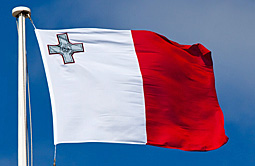
Frequently Asked Questions
Information for international applicants and their families.
The following are questions frequently asked about Malta's Citizenship by Merit framework and Malta's residence programmes. If you don't find your answers here, please contact us at your convenience.
Q: What is Malta Citizenship by Merit?
A: Malta Citizenship by Merit (CBM) is the framework
under the Maltese Citizenship Act (Cap. 188) under which citizenship
may be granted, at the discretion of the Maltese authorities, to individuals
who make an exceptional contribution to Malta, for example in science,
research, culture, the arts, sport, business or philanthropy. It is
not an investment programme.
The former citizenship by investment framework (Maltese Exceptional
Investor Naturalisation, MEIN) closed following the judgment of the
Court of Justice in Commission v Malta
(Case C-181/23) of 29 April 2025.
Applicants must meet the eligibility and due-diligence requirements,
including demonstrating integrity and a genuine link with Malta. Each
application is assessed individually, and meeting the criteria does
not guarantee that citizenship will be granted.
Q: Is Zenturo licensed, and how can I verify it?
A: Yes. Our company director and the immigration attorneys we work with
are government-licensed agents.
Our company director currently holds Residency Malta Agency license RES-DALI, and
previously held Komunità Malta (Community Malta Agency) license AKM-DALI
under the Agents (Licences) Regulations (S.L. 188.05); Komunità Malta no longer issues AKM license numbers. The company is
registered in Malta (registration C-39472) and has operated since
2006. You do not need to take our word for it: you can contact
Residency Malta Agency or Komunità Malta
and ask them to confirm license holder Dr. Alexei Dalli. See our guide on how to
verify a Malta citizenship agent.
Q: What rights does Maltese citizenship carry?
A: Citizenship carries rights and obligations under
Maltese law, which applicants should consider carefully before applying.
Malta permits dual citizenship, but whether an applicant may keep
their existing citizenship depends on the law of their country of origin.
Acquiring citizenship does not by itself determine an individual’s
tax position (see the question on taxation below).
Rights and considerations include:
- Access to public services in Malta, such as healthcare and education, as governed by Maltese law
- The ability to hold dual citizenship, where the country of origin permits it
- Obligations under Maltese law that apply to all citizens
Summary
What rights does Maltese citizenship carry? Citizenship carries rights
and obligations under Maltese law. Access to public services in Malta
is governed by Maltese law. Malta permits dual citizenship, but applicants
should confirm the position of their country of origin.
Main Points: Rights of Maltese citizens
- Access to public services governed by Maltese law
- Dual citizenship permitted by Malta
- Citizenship carries obligations as well as rights
- Citizenship does not by itself determine tax position
Q: What is the difference between residency and citizenship
in Malta?
A: A residence permit allows
a person to live in Malta under the conditions of the permit, which
may be temporary or permanent. It does not confer Maltese citizenship,
and the holder’s access to services and employment depends on the type
of permit.
Citizenship confers the rights and obligations of
a Maltese national.
Under
the citizenship by merit framework, applicants first hold residence
status in Malta before a citizenship eligibility application is considered.
Residence under a residence programme does not by itself lead to citizenship.
Malta offers several options depending on the applicant’s profile,
including temporary residence, permanent residence, and the citizenship
by merit framework.
Summary:
A residence permit grants the right to live in Malta under the conditions of the permit. Citizenship confers the rights and obligations of a Maltese national. Residence does not by itself lead to citizenship.
Main Points: Differences between Malta Citizenship and Residency
- A residence permit allows the holder to live in Malta
- A residence permit does not confer citizenship
- Citizenship confers the rights and obligations of a Maltese national
- Under CBM, residence status comes first
- Malta allows dual citizenship
Q: What is the cost of Malta Citizenship by Merit?
A: Citizenship under the framework is not granted
on the basis of a financial contribution alone, and there is no fixed
contribution amount. Applicants must meet merit-based criteria, such
as cultural, scientific, economic or philanthropic contributions to
Malta.
Administrative fees are set by Komunità Malta and apply at each stage of the application; the latest amounts are available upon request. Our legal fees depend on the complexity of the case and the number of family members included.
If you are unsure whether you meet the criteria, you can complete our free Malta CBM qualification assessment form or contact us.
Q: What is the cost of the Malta permanent residence program
(MPRP)?
A: The cost of Malta MPRP permanent residency is around
€99,000 plus fees and property rental (or purchase).
There are
three main types of expenses: government-mandated investments, government
application fees, and legal fees.
Investment breakdown:
Main applicant: EUR 37,000 (same whether property purchase or rental).
2. Malta Property Investment (minimum 5 year holding period):
Main applicant only: Property purchase at EUR 375,000 or property rental at EUR 14,000 per year.
3. Malta Philanthropic Donation:
Main applicant only: EUR 2,000.
4. Malta Government Administration Fee:
Main applicant: EUR 60,000.
Spouse and Minor Children: No additional charge.
Adult Dependents (older children, parents, grandparents): EUR 7,500 each.
5. Legal Fees:
Depending on the number of family members to be included. To calculate government fees for applicants who wish to include dependents, please use our MPRP Cost Calculator. Total legal fees depend on the number of family members to be included. Please contact us for a custom quotation.
Q: Does Malta allow dual citizenship?
A: Yes. Malta has permitted dual and multiple
citizenship since 2000, and Maltese law does not require new citizens
to renounce another nationality.
Whether you may keep your present nationality depends on the law
of your country of origin. Some countries do not permit dual citizenship
and may require you to renounce your original nationality before acquiring
another. Please verify this with the authorities of your country of
origin before applying.
Where dual citizenship is permitted,
eligible family members included in an application may also hold dual
citizenship, subject to the law of their country of origin.
Summary:
Does Malta allow dual citizenship? Yes. Maltese law permits dual citizenship. Whether an applicant may keep their existing nationality depends on the law of their country of origin, which should be confirmed before applying.
Main Points: Malta Dual Citizenship
- Malta allows dual citizenship
- Permitted under Maltese law since 2000
- The country of origin’s rules also apply
- Some countries require renunciation
Q: What is the difference between the Global Residence
Program (GRP), and the Malta Permanent Residence Programme
(MPRP)?
A: The Maltese Global Residence Program (GRP)
offers 1-year residency in Malta, 90-day visa-free travel to
all European countries within the Schengen area, and the option to apply
for a Malta work permit.
However, residency status under the GRP program needs to be renewed
annually to avoid expiration. The annual minimum tax is €15,000 (to increase to EUR 35,000 for applications filed from Jan. 01, 2027). Further, the applicant is
required to rent a residence at an annual lease of no less than €8,750
(a property purchase is also acceptable). Thus, the total minimum expense
to renew the GRP permit each year is approximately €24,000 plus fees.
GRP visa applicants can also benefit from Malta's low flat tax rate
of 15% chargeable on all income remitted to Malta from foreign sources,
subject to a minimum annual tax of EUR 15,000 (to increase to EUR 35,000 for applications filed from Jan.01, 2027). To take advantage of
the tax benefit GRP applicants must refrain from staying in any other
jurisdiction for more than 182 days and becoming a tax resident in that
other country.
Processing can be as fast as 3-4 months. The GRP does not
lead to Malta citizenship, and it does not result in
receiving a Malta passport.
The Malta Permanent Residence Programme (MPRP) leads
to residency (meaning the permission to live in Malta as long as desired),
visa-free travel to all European countries within the Schengen area
for 90 out of 180 days, but unlike the GRP it has no
recurring minimum tax. In other words, the MPRP does not
need to be renewed each year.
The applicant can choose between purchasing a property, or renting a
property. If purchasing, the minimum property value must be EUR 375,000.
If renting a property, the minimum rental amount must be EUR 14,000
per year.
The administrative fee for the main applicant is €60,000. There is no administrative fee to include a spouse and minor children. The fee for adult dependents (older children, parents, grandparents) is €7,500 per person.
The main applicant must also make a non-refundable government contribution in the amount of EUR 37,000 regardless of whether the property is purchased or rented. Lastly, the applicant must make a philanthropic donation of EUR 2,000 to a Maltese-registered charity of the applicant's choice.
To qualify, the main applicant needs to prove ownership of assets valued at (A) EUR 500,000 or more, which may include bank deposits, stocks/bonds/mutual funds, real estate, and similar, with at least EUR 150,000 in liquid funds, or (B) EUR 650,000 with at least EUR 75,000 in liquid assets.
The MPRP program leads to Maltese residency, but just like the GRP
program it does not lead to Maltese citizenship. Residence
under either programme does not by itself lead to citizenship.
The following table compares both residency programs:
| Global Residency Program (GRP) | Malta Permanent Residence Programme (MPRP) | |
|---|---|---|
| Minimum Tax | EUR 15,000 (EUR 35,000 starting 2027) | Zero |
| Tax Rate | 15% | 0% – 35% |
| Property Purchase | Central/North EUR 275,000 South/Gozo EUR 220,000 |
EUR 375,000 |
| Property Rental | Central/North EUR 9,600 South/Gozo EUR 8,750 |
EUR 14,000 |
| Minimum Stay in MT | Zero | Zero |
| Official Application Fee | EUR 6,000 | EUR 60,000 |
| Contribution | Zero | EUR 37,000 |
| Donation to Charity | Zero | EUR 2,000 |
| Dependents | Spouse, Children, Brothers,
Sisters, Parents (if financially dependent) |
Spouse & Minor Children: Zero Adult Dependents (Older Children, Parents & Grandparents): EUR 7,500 each |
These cost estimates are exclusive of attorney fees and will vary
based upon the number of family members to be included.
Please contact us for a checklist of all required application documents
and to receive a detailed quotation.
For an additional in-depth discussion and frequently asked questions
about the Malta permanent residence (MPRP) program please see our in-depth
MPRP FAQ page.
Q: What is the difference between the Ordinary Residence
(OR) program and The Residence Program (TRP)?
A: Both programs are only available for EU nationals,
meaning applicants who are already a citizen of another EU member country.
Both programs allow EU citizens to live in Malta indefinitely. The Residence
Program (TRP) offers a special flat tax of 15% on income brought into
Malta (EUR 15,000 annual tax minimum) which makes this program especially
attractive to high income individuals. These programs do not
lead to Malta citizenship / the Malta passport.
Q: Are your attorneys licensed by the Malta government?
A: Yes. Zenturo’s Malta applications are filed by a government-licensed attorney,
Dr. Alexei Dalli (Residency Malta Agency license RES-DALI; formerly
Komunita’ Malta AKM-DALI), authorised to represent applicants before the Maltese
authorities.
Q: Do you get citizenship if you buy real estate in Malta?
A: No. Maltese citizenship cannot be bought, and buying
or renting property in Malta does not by itself lead to citizenship.
Applicants under the citizenship by merit framework must meet all eligibility
requirements, including the merit criteria and due diligence.
Summary
Does buying real estate in Malta give you citizenship? No. Whether a
property in Malta is required depends on the residence programme or
framework concerned. Under the citizenship by merit framework, a residence
in Malta may form part of how an applicant demonstrates a genuine link
with Malta, alongside the other eligibility requirements.
Main Points: Malta citizenship and real estate
- Citizenship cannot be bought
- Property requirements depend on the programme or framework
- All eligibility requirements must be met
Q: How demanding is the application process for Malta citizenship?
A: The process is rigorous. Applicants must prepare
detailed forms and supporting documentation for all family members,
and the authorities carry out extensive due diligence and background
checks to verify eligibility and integrity.
Applicants may work
with a legal representative to prepare and submit a complete file.
Each application is assessed individually against the applicable criteria,
and the decision is at the discretion of the competent authority. Meeting
the criteria does not guarantee that citizenship will be granted.
Summary
Is it easy to obtain Maltese citizenship? Applying under the citizenship
by merit framework is a regulated procedure that involves defined application
stages, detailed documentation, due-diligence checks, government fees,
and an individual assessment of the applicant’s merit. Processing times
depend on the competent authorities and the circumstances of each case.
Main Points: What the process involves
- Strict due diligence is applied
- A clean criminal record is required
- Detailed documentation is needed for all family members
- Each application is assessed individually
- The decision is discretionary
Q: How will new citizens be taxed?
A: In Malta, liability to tax depends on residence
and domicile rather than on citizenship. Acquiring Maltese citizenship
does not by itself make a person resident or domiciled in Malta for
tax purposes.
Domicile is a legal concept that broadly refers to a person’s permanent
home. A person acquires a domicile of origin at birth and may later
acquire a domicile of choice.
Individuals who are resident but not domiciled in Malta are generally
taxed on income arising in Malta and on foreign income remitted to Malta.
Foreign capital gains are generally not taxable in Malta for such individuals,
even if remitted. Individuals who are both resident and domiciled in
Malta are generally taxed on their worldwide income.
Duties may apply to certain transactions, including transfers of property
in Malta. Tax treatment depends on individual circumstances, including
the rules of the applicant’s current country of residence and any applicable
double tax treaties.
Given the complexity of tax matters, we recommend consulting a licensed tax advisor for personalised guidance. Should you require assistance, we can facilitate an introduction to a qualified Maltese tax professional.
Q: Can family members be included in a Malta citizenship application?
A: Family members may be included where the applicable
rules allow. This typically covers a spouse or partner, minor children
under 18 years of age, and financially dependent adult children under
the age of 29. The eligibility of each family member is confirmed case
by case during file preparation.
Q: Will my citizenship expire?
A: Maltese citizenship does not expire. However, citizenship
acquired by naturalisation may be revoked on the grounds set out in
the Maltese Citizenship Act. Children of Maltese citizens may acquire
citizenship by descent in accordance with the Act.
Q: What are the main stages of a Malta Citizenship by Merit application?
A: Applicants first apply for residence status
in Malta. Once the required period of residence has been met, the citizenship
eligibility application is filed together with the merit proposal,
and the authorities carry out a comprehensive background check and
due diligence.
If eligibility is approved, the citizenship application
is filed. Approved applicants take the oath of allegiance and receive
a Certificate of Naturalisation.
The stages in more detail:
- Proposal outline and assessment, including initial AML/KYC screening
- Residence application
- Citizenship eligibility application, with due diligence
- Merit proposal, submitted together with the eligibility application
- Citizenship application and oath of allegiance
Summary
What are the stages of a Malta Citizenship by Merit application? Residence
status comes first, followed by the eligibility application and merit
proposal, and then, if eligibility is approved, the citizenship application.
Processing times depend on the competent authorities and on how quickly
the applicant can provide the required documentation, such as police
certificates. See our overview
of the application stages.
Q: Can you help me find suitable real estate in Malta?
A: Yes. Please review available properties with pictures
and prices on our Malta real estate
page.
In addition, we offer a range of professional real
estate services to buyers; please request our "Malta Real Estate Services"
brochure for details.
We work with licensed real estate agencies
and developers in Malta and can help you find a property that meets
any requirements applicable to your application. Not all properties
meet the applicable standards, and bringing a property up to standard
after it has been rented or bought can involve additional cost.
Through our professional relationships in Malta we can assist with
identifying suitable properties, arranging property viewings, drafting
and reviewing legal contracts, and liaising with local notaries and
architects as needed.
When you decide on a property for purchase we can set up a Power of
Attorney to appear on your behalf without the need for you to travel
to Malta to finalise the transaction.
Q: Are there rules on selling property in Malta?
A: Any requirement to hold a property for a minimum
period depends on the residence programme or framework under which it
is held, and the tax treatment of a sale depends on individual circumstances.
We recommend confirming both with us and with a tax adviser before selling.
Q: Do I need to invest in a Malta company and create jobs
to qualify for citizenship?
A: No.
The citizenship by merit framework does not require business investment
or job creation, and it does not set investment thresholds or employment
targets.
Contributions to Malta’s economy, such as activities
that create employment or support local enterprises or charities, are
one of several forms of contribution that the competent authority may
consider. Each proposal is assessed on its merits within a discretionary
framework.
Q: What is Malta's position on fintech / cryptocurrency /
blockchain technology?
A: Malta has
a regulatory framework for financial services and digital assets, supervised
by the Malta Financial Services Authority (MFSA).
Under the citizenship
by merit framework, a proposed contribution in the fintech sector is
assessed in the same way as any other proposal: individually and on
its merits by the competent authority.
Our affiliated professionals
can advise on the regulatory requirements for fintech ventures in Malta.
Please use our fintech contact form for further information.
Q: Can you help me with applying for the Malta Retirement
Programme (MRP)?
A: Yes, the Malta retirement program is targeted at
retirees (EU and non-EU nationals) who receive at least 75% of their
income from a pension. Applicants must purchase or rent a personal residence
in Malta.
Q: Can you help me with applying for the Malta Nomad Residence
Permit (MNRP)?
A: Yes, the "Digital Nomad Visa" is available to applicants
who are not citizens of an EU member country. Applicants must be able
to work independent of location and prove that (a) they are employed
under a work contract issued by an employer outside of Malta, or (b)
they conduct business on behalf of a company registered outside of Malta
in which they are a partner or shareholder, or (c) they are a freelancer
or consultant offering services to clients who are based outside of
Malta. Applicants for the Malta nomad residence permit must earn a salary
of at least EUR 3,500 per month. Applicants must rent or purchase a
property in Malta, obtain health insurance, and pass all background
checks. Family members, including a spouse or partner, minor children,
and dependent adult children, maybe included on the application of the
main applicant. The visa is valid for one year, and may be renewed at
the discretion of the Malta government. The Nomad Residence Permit
does not entitle the holder to social benefits in Malta,
and it does not lead to permanent residency
or Maltese citizenship.
Q: Can you help me with finding a job?
A: We cannot assist with job placement.
Holders of a Maltese residence permit may
need a work permit, depending on their permit, and must secure employment
independently.
Q: Can you help me get a tourist or a student visa?
A: Sorry, we cannot assist with tourist or student
visas. However, if your intent is to file an application for residency
or citizenship we may assist with the initial travel visa to schedule
an in-person appointment at our offices.
If you have any further questions about the citizenship by merit framework or Malta’s residence programmes, please contact us in person, or by phone, Zoom, or email. This page provides general information only and does not constitute legal or tax advice.
Support During and After the Application
Each client works with a dedicated manager, supported by a team across multiple time zones, who remains the point of contact during the application and afterwards. We work with clients from many countries and, through specialist partners, can also assist with practical matters related to living in Malta, such as property, banking and insurance, company or trust formation, schooling, and residence matters for close family members.
