MALTA CITIZENSHIP BY MERIT
A Guide to Malta Citizenship by Merit
This guide provides general information on Malta’s citizenship by merit framework, under which Maltese citizenship may be granted on the basis of an exceptional contribution to Malta.
It covers what the framework is, who may apply, the criteria considered, the stages of an application, costs, and taxation, for those considering whether the framework is relevant to them.
The framework may be relevant to individuals with notable achievements in fields such as science, research, culture, the arts, sport, business or philanthropy. Each application is assessed individually, and the decision rests with the competent Maltese authorities.

What is Citizenship by Merit?
Citizenship by Merit (CBM) refers to the grant of Maltese citizenship under the Maltese Citizenship Act (Cap. 188) to individuals who make an exceptional contribution to Malta, for example in the arts, business, culture, healthcare, science, technology, sport, philanthropy or job creation. The framework is not an investment programme: citizenship is not granted on the basis of a financial contribution alone.
The grant of citizenship is discretionary. Applicants must satisfy the competent authority that they meet the applicable criteria and due-diligence requirements, and meeting the criteria does not guarantee that citizenship will be granted.
- Applicants first hold residence status in Malta before a citizenship eligibility application is considered.
- Applicants are expected to demonstrate a genuine link with Malta, which may be shown through time spent in Malta, a residence in Malta, and involvement in business, community or philanthropic life.
- Each application is subject to extensive due diligence, including checks on identity, integrity, and the source of funds and wealth.
- Approved applicants take the oath of allegiance and receive a Certificate of Naturalisation.
- The framework is administered by the Maltese government in accordance with Maltese law.
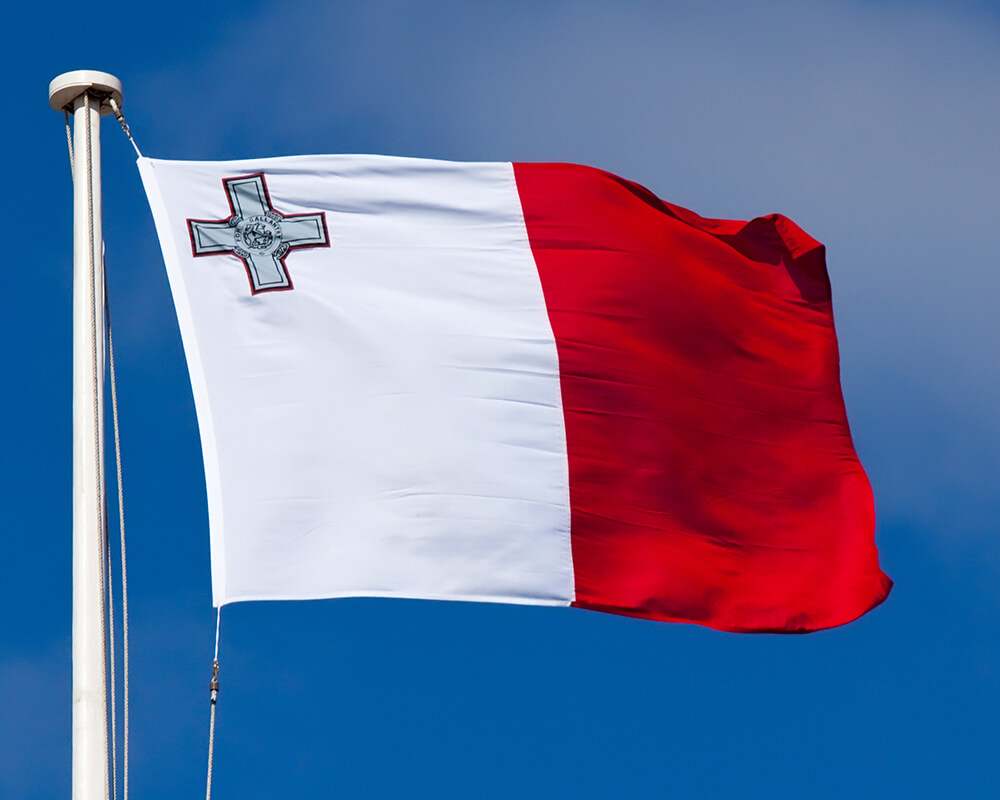
About Malta
Malta is a parliamentary republic. Applicants considering Maltese citizenship may find the following background useful.
Malta’s financial services sector is supervised by the Malta Financial Services Authority (MFSA).
- Malta has been independent since 1964 and a republic since 1974.
- Maltese and English are the official languages.
- Malta’s legal system draws on both civil law and common law traditions.
- Malta is located in the central Mediterranean, south of Sicily.
- Malta permits dual and multiple citizenship.

What Rights and Obligations Does Maltese Citizenship Carry?
Citizenship carries rights and obligations under Maltese law, which applicants should consider carefully before applying.
- Public services: access to public services in Malta, such as healthcare and education, is governed by Maltese law.
- Dual citizenship: Malta permits dual citizenship, but whether an applicant may keep their existing citizenship depends on the law of their country of origin.
- Obligations: citizens are subject to the obligations set out in Maltese law, and citizenship granted on merit is subject to any commitments made as part of the application.
- Tax: citizenship does not by itself determine an individual’s tax position (see the 183-day rule below).

Who Can Apply for Malta Citizenship by Merit?
Malta’s citizenship by merit framework considers individuals who demonstrate outstanding personal, professional or philanthropic contributions aligned with Malta’s national interest. Applicants must meet criteria relating to character, track record and their connection with Malta.
To begin, you can complete our free Malta Citizenship by Merit Qualification Assessment Form to indicate the categories you believe apply to you.
- Distinguished individuals: candidates with notable accomplishments in the arts, business, science, sport, culture or public service.
- Entrepreneurs, founders and innovators: those whose enterprise, technology, research or social initiatives contribute to Malta.
- Family members: family members may be included in an application where the applicable rules allow, typically a spouse or partner, minor children and financially dependent adult children.

What Criteria Are Considered for Malta Citizenship by Merit?
Assessment under Malta’s citizenship by merit framework considers an applicant’s integrity, track record and engagement with Malta’s public, cultural or economic life, and the alignment of the proposed contribution with the national interest.
To indicate the areas in which you believe your profile may be relevant, you can complete our free Merit-Based Citizenship Qualification Form.
The following criteria outline the key dimensions assessed under Malta’s citizenship by merit framework:
- Character & integrity: a clean background, good standing, and respect for Maltese law and democratic values.
- Alignment with national interest: alignment of the proposed contribution with Malta’s priorities, such as innovation, sustainability or social development.
- Track record: achievements in professional, philanthropic, creative or community fields relevant to the proposed contribution.
- Cultural & social engagement: participation in Maltese society, including local, cultural or public service initiatives.
- Genuine link: a demonstrated connection with Malta, for example through time spent in Malta, a residence, or business, community or philanthropic involvement. We will advise you on the requirements that apply in your circumstances.

How to Apply under the Malta Citizenship by Merit Framework
An application under the citizenship by merit framework involves several stages: initial screening, residence, due diligence and eligibility, assessment of the merit proposal, and, if approved, the citizenship application and oath of allegiance.
- Proposal Outline and Assessment
Government-mandated AML/KYC screening, followed by a structured consultation to review your background and intended contribution, such as innovation projects, cultural engagement or other initiatives in Malta. We prepare a proposal outline, review your planned contribution against the framework’s criteria, and advise you on whether to proceed.Purpose: Initial due diligence, assessment of the proposed contribution, and a recommendation on whether to proceed. - Residence (Malta Residence Application)
Preparation and filing of the required temporary residence application: forms, document collation, and coordination of your biometrics appointment with the Maltese authorities.Purpose: Residence status in Malta, which is required before a citizenship eligibility application can be filed. - Due Diligence (Malta Citizenship Eligibility Application)
The most technical stage. We prepare and file the formal eligibility application while the authorities carry out multi-jurisdiction due diligence (identity, integrity, source of funds and wealth), and we respond to any requests for further information. The eligibility application may be filed once the applicant has held residence status for the period required by the framework.Purpose: A decision on eligibility. - Merit Proposal
We prepare the full merit proposal, covering achievements, intended contribution to Malta, feasibility, governance and a delivery plan, with themes such as innovation, culture, sustainability or social impact, aligned with Malta Vision 2050. Supporting evidence is indexed for verification. The scope of the proposal depends on the nature of the contribution; for example, a business-related proposal may require a business plan and financial projections. In practice, the merit proposal is prepared in parallel with the due diligence stage, and both are submitted together as one case file.Purpose: A complete merit proposal submitted with the eligibility case. - Citizenship Application
Following eligibility approval, we finalise and file the citizenship application. Approved applicants take the oath of allegiance and receive a Certificate of Naturalisation.Purpose: A decision on the citizenship application. - Optional: Proposal Implementation & Compliance Reporting
Support after the decision to implement the proposed contribution and manage any ongoing compliance or progress reporting the authority may require.Purpose: Implementation of the contribution and any required compliance reporting.
Note: Processing times depend on the competent authorities and on the circumstances of each application.

Is There a Fixed Contribution Amount for Malta Citizenship by Merit?
No. Citizenship under the framework is not granted on the basis of a financial contribution alone, and there is no fixed contribution amount. Applicants must meet merit-based criteria, such as cultural, scientific, economic or philanthropic contributions to Malta, and each proposal is assessed on its merits by the competent authority.
If you are unsure whether you meet the criteria, you can complete our free Malta CBM qualification assessment form or contact us.
Our legal fees depend on the complexity of the case and the number of family members included. Please contact us for a quotation.

Is Malta Citizenship by Merit Suitable for You?
Citizenship by merit involves a long-term commitment to Malta and a detailed application process. Before applying, applicants should consider whether their profile, plans and personal circumstances fit the framework.
- Contribution: whether you can demonstrate an exceptional contribution to Malta that aligns with its national interest.
- Genuine link: whether you are able to establish and maintain a connection with Malta.
- Due diligence: whether you can document your background and the lawful source of your funds and wealth.
- Dual citizenship: whether your country of origin permits you to hold a second citizenship.
- Tax: how acquiring citizenship, and any change of residence, would affect your tax position in Malta and elsewhere.

What Does the Application Process Involve?
The application process is rigorous. Applicants should expect detailed documentation requirements, extensive due diligence and an individual assessment of their proposed contribution, with the final decision resting with the competent authority.
- Professional support: our team advises on the criteria, prepares documentation, and corresponds with the authorities on your behalf.
- Individual assessment: each application is assessed on its own facts against the applicable criteria.
- Coordination: we coordinate the residence, eligibility and citizenship stages, including background checks and compliance requirements.
- Regulated framework: the framework operates under Maltese law and is subject to the due-diligence standards applied by the Maltese authorities.

What Costs Should Applicants Expect?
Although there is no fixed contribution amount, applicants should be prepared for administrative and procedural costs associated with the application, including legal, government and residence-related expenses. Planning for these costs in advance is advisable.
- Government charges: official charges set by the competent authority.
- Legal representation: professional fees for eligibility review, documentation and representation throughout the process.
- Residence costs: depending on personal circumstances, costs such as accommodation and health insurance.
- Family members: costs may vary depending on the number and age of family members included in the application.
- Quotation: contact our team for an overview of expected costs based on your profile.

What is the 183-Day Rule?
The 183-day threshold is commonly used to indicate tax residence: an individual who spends more than 183 days in a country in a year is generally regarded as tax resident there. In Malta, tax residence is determined on the facts of each case.
Acquiring Maltese citizenship does not by itself make a person resident or domiciled in Malta for tax purposes. In Malta, liability to tax depends on residence and domicile rather than on citizenship.
Individuals who are resident but not domiciled in Malta are generally taxed on income arising in Malta and on foreign income remitted to Malta. Foreign capital gains are generally not taxable in Malta for such individuals, even if remitted. Individuals who are both resident and domiciled in Malta are generally taxed on their worldwide income.
- 183-day threshold: a common indicator of tax residence, applied according to the facts of each case and any applicable double tax treaty.
- Citizenship and tax: obtaining Maltese citizenship alone does not make an individual tax resident in Malta.
- Residence and domicile: Malta taxes resident non-domiciled individuals on Malta-source income and foreign income remitted to Malta.
- Other taxes and duties: duties may apply to certain transactions, including transfers of property in Malta.
Given the complexity of tax matters, we recommend consulting a licensed tax advisor for personalised guidance. Should you require assistance, we can facilitate an introduction to a qualified Maltese tax professional.
If you have any questions about the Malta citizenship by merit framework, please contact us in person, or by phone, Zoom, or email. This page provides general information only and does not constitute legal or tax advice.
